
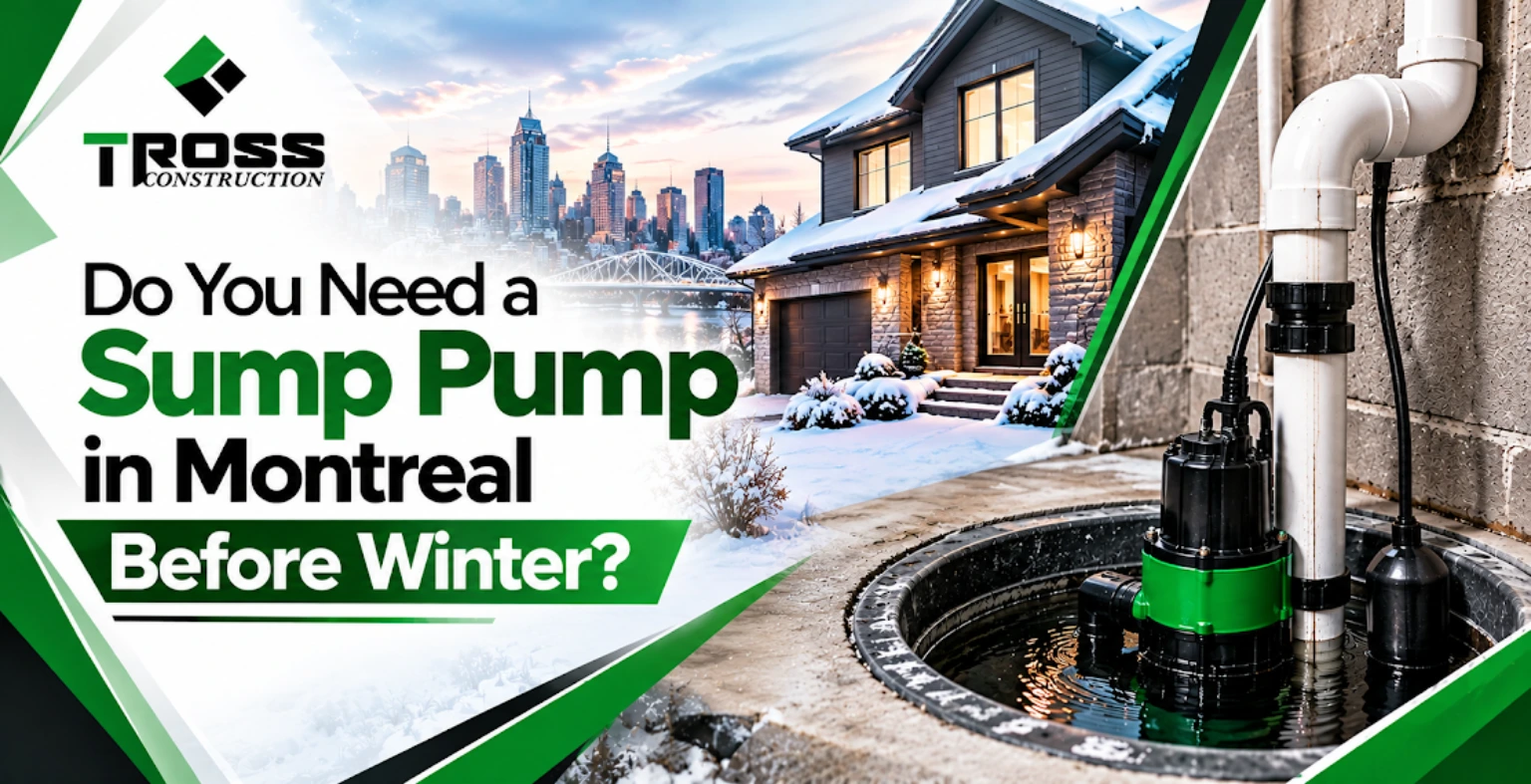
If your basement has ever smelled damp after a heavy rain, or you have watched water creep along the floor during the spring thaw, you already know how fast things can go wrong underground. In Montreal, a wet basement is not a rare problem. It is one of the most common and most expensive issues homeowners face.
So, do you need a sump pump in Montreal before winter? For a large number of homes, the answer is yes. At Tross Construction, we see the same pattern every year: homeowners wait until the snow melts, the basement floods, and a repair that could have cost a few thousand dollars becomes a major restoration project.
This guide explains how to tell whether your home needs a sump pump, why fall is the best time to act, what installation involves, and how to avoid the mistakes that lead to costly damage.
Why Montreal Basements Are at Risk
Montreal’s climate puts constant stress on foundations. Several local factors work together to push water into basements.
Freeze-thaw cycles. Water in the soil freezes, expands, and cracks small gaps in foundation walls and floor slabs. When the temperature rises, that same water flows right through the new cracks.
Heavy spring snowmelt. Montreal receives a lot of snow, and when it melts quickly, the ground around your home becomes saturated. If the soil can’t absorb the water, it looks for the lowest point, which is usually your basement.
Older housing stock. Many Montreal homes, including plexes, duplexes, and triplexes, were built decades ago. Older foundations often have aging weeping tile (drain tile), deteriorated waterproofing membranes, and no pump at all.
High water tables and clay soil. In some neighborhoods, the groundwater sits close to the foundation, and clay soil drains slowly. Water lingers around your walls instead of draining away.
Intense rainfall events. Fall and summer storms are becoming heavier, and a single downpour can overwhelm drainage around a home.
A sump pump is designed to deal with exactly this kind of problem by removing water before it can rise above your basement floor.
What Does a Sump Pump Actually Do?
A sump pump sits in a pit (the sump basin) at the lowest point of your basement or crawl space. Water from your weeping tile or the surrounding soil collects in that pit. When the water reaches a set level, a float switch activates the pump, which sends the water out through a discharge line and away from your foundation.
Think of it as your home’s last line of defense. Gutters and grading keep water away from the walls, weeping tile collects water at the footing, and the sump pump moves what’s left out of the building.
7 Signs You Need a Sump Pump in Montreal
Not sure where your home stands? These warning signs suggest a sump pump is worth serious consideration:
- Water on the floor after rain or snowmelt. Even a small puddle is a sign that water is getting in.
- A musty smell. Persistent dampness often smells before you see anything.
- Mold or mildew on walls, stored boxes, or the base of drywall.
- Efflorescence, the white, chalky powder on concrete or block walls. It shows that moisture is moving through the masonry.
- Peeling paint, bubbling wallpaper, or warped flooring near exterior walls.
- Cracks in the foundation or floor slab, especially ones that darken or leak when it rains.
- A finished basement you want to protect. If you have invested in a family room, bedroom, or rental unit below grade, a pump is cheap insurance.
If you recognize even one or two of these, a professional inspection is a smart next step.
When You May Not Need a Sump Pump
To be fair, not every home needs one. You may be fine without a sump pump if:
- Your basement has stayed completely dry for many years, including through spring thaws and major storms.
- Your lot is well graded, your gutters discharge far from the house, and your foundation is in good condition.
- You live on a higher, well-drained site with sandy or gravelly soil.
Even then, conditions change. A neighbor’s construction project, a clogged drain tile or a particularly wet season can turn a dry basement into a wet one. An inspection will tell you whether your current setup is enough.
Why Install a Sump Pump Before Winter?
Timing matters, and fall is the best window.
1. Install before the ground freezes. Excavation and drainage work are far easier when the soil is workable. Once deep frost sets in, projects get slower, harder, and more expensive, and some work has to wait until spring, which is exactly when flooding risk peaks.
2. Be ready for the spring thaw. The worst basement floods in Montreal often happen in March and April. A pump that is installed, tested, and running by December gives you months of confidence.
3. Avoid the emergency rush. When a big storm or fast melt hits, contractors get flooded with calls. Booking in fall means you get scheduling flexibility and proper planning, not a panicked same-day repair.
4. Catch hidden problems early. Fall inspections often reveal clogged weeping tile, cracked walls, or poor grading while there is still time to fix them properly.
5. Protect your belongings and air quality. Prevention is much cheaper than replacing flooring, drywall, furniture, and personal items or dealing with mold remediation.
What a Professional Sump Pump Installation Involves
A quality installation is more than dropping a pump into a hole. At Tross Construction, a proper job typically covers:
Site assessment. We look at your foundation, existing drainage, water entry points, basement layout, and the best place for the pit.
Pit and basin installation. A sealed, correctly sized basin is set at the lowest point so water collects efficiently.
The right pump for your home. Submersible pumps are the most common choice for residential basements because they are quieter and more efficient. Capacity is matched to your water volume.
Proper discharge routing. Water must be sent far enough from the foundation, in line with local requirements, so it does not simply return to the basement. In Montreal, rules on where sump water can be discharged vary by borough and building type, so this should always be checked before work begins.
A check valve. This stops water in the discharge line from flowing back into the pit.
Backup power or a secondary pump. Storms often knock out electricity at the exact moment you need the pump most. A battery backup or a second pump keeps your protection running.
Testing. We confirm the pump activates, drains, and shuts off correctly before we leave.
How Much Does a Sump Pump Cost in Montreal?
Costs vary based on your home and the scope of work. As a general guide, a standard installation in an existing home can range from a couple of thousand dollars to considerably more if drain tile work, concrete cutting, or a battery backup is involved. Factors that affect your price include
- Floor type and concrete thickness
- Whether weeping tile needs repair or replacement
- Pump capacity and quality
- Battery backup or dual-pump systems
- Discharge distance and routing
- Accessibility of the basement
The most reliable way to know your cost is to have a contractor inspect your home and give a written estimate. And remember to compare that number against the price of a flooded basement, which can quickly reach tens of thousands of dollars.
It is also worth checking your home insurance policy. Coverage for water damage varies widely, and groundwater seepage is often treated differently from sewer backup. Many homeowners discover gaps in their coverage only after a loss, so ask your broker what is and isn’t covered.
Sump Pump vs. Backwater Valve vs. Waterproofing
These three are often confused, but they solve different problems:
- Sump pump: removes groundwater that collects around or beneath your foundation.
- Backwater valve: prevents sewage from flowing back into your home through the drain during municipal sewer overload. Montreal has promoted these valves, so ask about requirements and any available subsidies for your borough.
- Foundation waterproofing: seals walls and improves exterior drainage to stop water from entering in the first place.
Many homes benefit from more than one. A sump pump handles what gets past your defenses, a backwater valve protects against sewer backup, and waterproofing reduces how much water you have to manage. A good contractor will look at the whole picture rather than sell you a single product.
Why Montreal Homeowners Choose Tross Construction
Protecting your basement is a decision about your home’s long-term value and your family’s peace of mind. Tross Construction brings a practical, honest approach to every project:
- Thorough inspections that identify the real cause of moisture, not just the symptoms
- Clear, written estimates with no vague line items
- Quality materials and pumps selected for Montreal’s climate
- Clean, respectful work inside your home
- Planning for the long term, including backup systems and drainage improvements
Whether you own a single-family home, a plex, or a commercial property, our goal is the same: keep your space dry through every Montreal winter, thaw, and storm.
Frequently Asked Questions
1. Is a sump pump mandatory in Montreal?
There is no blanket rule that every home must have one, but requirements can depend on your borough, building type, and whether you are doing new construction or major renovations. Even where it is not required, a sump pump is strongly recommended for homes with a history of moisture, a high water table, or a finished basement. Contact your borough or ask Tross Construction to confirm what applies to your property.
2. How long does a sump pump last?
Most residential sump pumps last roughly 7 to 10 years, depending on how often they run, water quality, and maintenance. A pump that runs frequently during wet seasons may wear out sooner. Testing it every few months and replacing it before it fails is much cheaper than dealing with a flood.
3. Can I install a sump pump myself?
A basic pump swap is possible for a confident DIYer, but a full installation involves breaking concrete, connecting to drain tile, routing the discharge correctly and meeting local requirements. Mistakes can cause the pump to fail or even let water back in. Professional installation also gives you a proper warranty and accountability if something goes wrong.
4. What happens to my sump pump during a power outage?
A standard electric pump stops working when the power goes out, which often happens during the same storms that cause flooding. A battery backup, or a water-powered or secondary pump, keeps the system running. For any home where a flooded basement would cause serious damage, we recommend a backup.
5. How often should I maintain my sump pump?
Test it at least twice a year, ideally in early fall and again before spring thaw. Pour water into the pit to confirm the float rises and the pump activates, clear any debris and make sure the discharge line is not frozen or blocked. A professional inspection every year or two helps catch problems early.
Don’t Wait for the First Flood
Winter in Montreal is coming, and the spring thaw that follows is when basements are tested hardest. If you have noticed damp, odours or water, or if you simply want peace of mind, the best time to act is now, while the ground is workable and our schedule has room.
Contact Tross Construction today for a free, no-obligation basement assessment. Call us at [4389208647] or [contact@trossconstruction.ca] and let us make sure your home is ready for winter.